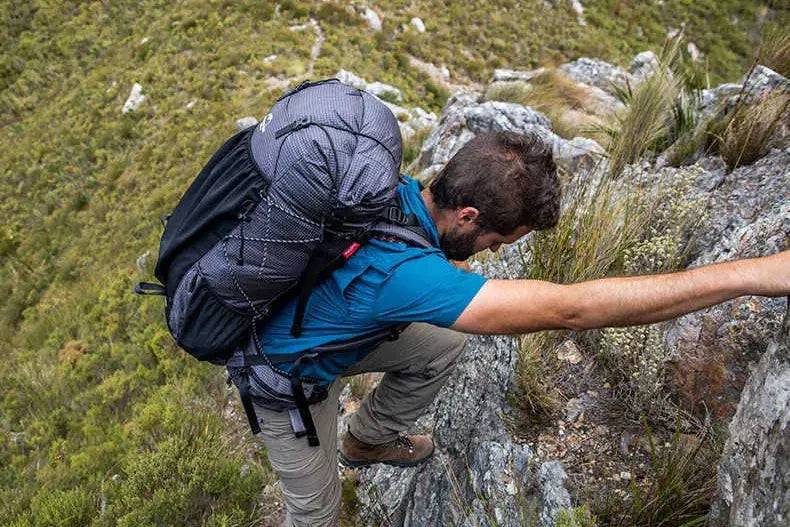
Longwa™ Base 20L Hiking Backpack
Longwa Base 20-Hiking leisure backpack - Naturehike
Longwa™ Base 20L Hiking Backpack
Longwa Base 20-Hiking leisure backpack - Naturehike

Longwa™ Base 20L Hiking Backpack

Regular price€101,95
/
Tax included. Shipping calculated at checkout.

Longwa™ Base 20L Backpack, a versatile backpack designed for seamless transitions between city commuting and outdoor hiking.

Key Features:

  • Ultra-lightweight Design with 20L Capacity: Weighing only 559g (without the belt), this backpack is built for featherweight outdoor hiking and effortless city commuting. Despite its ultralight feel, it offers a spacious 20L capacity (Size: 46*26*16cm), easily fitting your daily essentials or short-trip gear while keeping your journey light and energy-efficient.
  • Aerosyx™ Breathable Carrying System: Equipped with the advanced Aerosyx™ carrying system, featuring dampening thickened shoulder straps and a 3D-punching breathable back panel. This design allows air to circulate, provides faster heat dissipation, and relieves shoulder pressure. The removable waist belt helps transfer weight to your hips for secure, stable support and better spine protection.
  • 6-layer Storage with DIY Expansion: Stay organized with 6 layers of smart storage, including an independent water bag/computer compartment, dual expandable side pockets, an intermediate auxiliary warehouse, and a front pre-storage compartment. The frontal replaceable elastic rope and 4 anchor points allow for flexible DIY expansion, letting you easily strap on a tent, trekking poles, or a sleeping pad.
  • Durable Materials and Practical Details: Made from 100% polyamide fiber (main fabric) with a 100% polyester lining. The ripstop grid fabric is wear-resistant and ready for outdoor challenges. It features an independent shoulder strap phone case for quick access and an ITW whistle chest buckle for infinite quick adjustment and emergency safety. Recommended load: under 8.8kg.
  • Versatile for City and Outdoor Use: Designed for seamless transition from city commuting to outdoor hiking. The stylish design is available in Pink, Blue, and White. Whether you are walking to work or navigating rugged terrain, the secure fit and dynamic follow-up design adapt to and alleviate pressure, making every trip effortless and comfortable.

Color
🌿
Erre léger, erre doré Achetez une tente et bénéficiez de 20% de réduction sur les articles de couchage

Thank you for your order!

  • We'll process your order within 2 business days of receiving payment.
  • If any issues arise, we'll notify you promptly.

Estimated delivery times:

  • Local warehouse: 5–10 business days
  • China warehouse: 10–18 business days(may vary by region)

Please note: to ensure your tracking number remains valid—especially on China-origin shipments that may generate intermediate tracking numbers—there may be a short delay before we upload it. We appreciate your patience and support!

We Believe in What We Build

At NATUREHIKE, we understand the importance of reliable gear in the backcountry. That’s why our products are engineered to meet the highest quality standards and rigorously tested before reaching you.

Return & Exchange

Conditions of return


  • Returns must be made within 7 days of receipt.
  • Items must be new, unused, and in original condition.
  • Includes all original tags, packaging, and components.
  • Proof of purchase is required.

Damaged Items

If your product arrives damaged due to packaging issues, please contact us within 3 days of receipt, and we will arrange a replacement.

Warranty

If you encounter an issue covered by the NATUREHIKE Limited Warranty, please contact our team for assistance. We’re here to help you get started.

Contact Us

Selected Image
Dimensions
  • Size: 46 x 26 x 16 cm / 18.1 x 10.2 x 6.3 inches
  • Small Front Pocket: Approx. 16 x 17 cm / 6.3 x 6.7 inches
  • Main Inner Compartment: 25 x 34 cm / 9.8 x 13.4 inches
  • Side Pocket Height: 18 cm / 7.1 inches
Weight
  • Approx. 595g / 1.31 lbs (including waist belt)

Materials
  • Main Fabric: 100% Polyamide (Nylon);
  • Lining: 100% Polyester
Selected Image

For day hikes, around 18–30 L is usually enough for water, food, extra layers, and daily essentials. For 1–3 night trips, consider around 30–50 L. For 3–5 night treks, 50–70 L gives you more room for a sleeping system, shelter, food, and additional clothing. Longer trips or cold-weather adventures may require 70 L or more, depending on your gear.

Bigger isn't always better. An oversized backpack adds unnecessary weight and can make it harder to keep your load organized and stable. Choose enough capacity for your essential gear without carrying more pack than you need.

Don't choose a hiking backpack by height alone; torso length matters most.

To measure your torso, locate the C7 vertebra—the prominent bone at the base of your neck when you tilt your head forward. Then find the top of your hip bones, known as the iliac crest. Measure the distance between these two points along your back and compare it with the size range listed for the backpack.

Once the pack is on, the hipbelt should sit securely around the top of your hips, while the shoulder straps should wrap naturally around your shoulders without large gaps. If the backpack has an adjustable torso system, fine-tune the back length before adjusting the other straps.

A properly fitted backpack should feel close and stable without concentrating the entire load on your shoulders.

A well-designed suspension system helps support the load, transfer weight to your hips, stabilize the pack, and improve ventilation and comfort over long distances.

It typically works through a combination of the back panel or frame, shoulder harness, hipbelt, load-lifter straps, and sternum strap. When properly fitted and adjusted, the hipbelt helps distribute the load around your hips, while the shoulder straps and load lifters keep the backpack stable and close to your body.

Ventilation is another important factor, especially on long or warm-weather hikes. For example, the Naturehike Seek-wind™ Pro Hiking Backpack uses an AIR FLOAT suspension system, combining a 3D floating back panel with breathable mesh to create airflow channels between the backpack and your back. Its adjustable fit, center-of-gravity straps, chest strap, and X-shaped hipbelt work together to improve stability and distribute pressure during multi-day hikes.

The best suspension system should match your body shape, pack weight, and hiking conditions. For multi-day trekking or heavier loads, look for good hip support, adjustable fit, load stability, and effective back ventilation.

Good weight distribution can make a backpack feel more stable and comfortable on the trail.

Place heavier items close to your back and around the middle-to-upper part of the pack, rather than letting heavy gear sit far away from your body. Bulky but lighter items, such as a sleeping bag, can usually go toward the bottom.

Keep items you need frequently—such as snacks, water, a rain jacket, navigation tools, or sunscreen—in easy-to-reach pockets or near the top of the pack.

Try to keep the load balanced from left to right, and use compression straps where available to prevent gear from shifting as you move. Avoid hanging too many heavy items outside the backpack, as this can pull the load away from your center of gravity.

A rain cover is a good idea if you expect rain or prolonged wet conditions. Many hiking backpack fabrics offer some water resistance, but that does not necessarily make the entire backpack waterproof—water can still enter through seams, zippers, openings, or other construction points.

A rain cover helps protect the outside of the backpack and can also reduce how much water the pack fabric absorbs during heavy rain.

For moisture-sensitive gear such as down sleeping bags, clothing, electronics, or important documents, consider adding another layer of protection inside the backpack using waterproof stuff sacks, dry bags, or a pack liner.

For extended wet-weather trips, combining external rain protection with internal waterproof storage provides better protection than relying on the backpack fabric alone.

  • After each trip, empty your backpack completely and remove loose dirt, sand, food crumbs, and debris. For light dirt, spot cleaning with lukewarm water, mild soap, and a soft cloth or brush is usually enough.
  • For a deeper clean, always check the care instructions for your specific backpack first. In general, avoid washing a technical hiking backpack in a washing machine or putting it in a dryer, as this may damage fabrics, coatings, foam, or structural components.
  • Pay extra attention to areas that collect sweat and dirt, such as the shoulder straps, hipbelt, back panel, and zippers. After cleaning, allow the backpack to air-dry completely in a shaded, well-ventilated place before storing it.
  • Store your backpack clean and dry, and avoid prolonged exposure to moisture, excessive heat, or direct sunlight when not in use.
Selected Image
Dimensions
  • Size: 46 x 26 x 16 cm / 18.1 x 10.2 x 6.3 inches
  • Small Front Pocket: Approx. 16 x 17 cm / 6.3 x 6.7 inches
  • Main Inner Compartment: 25 x 34 cm / 9.8 x 13.4 inches
  • Side Pocket Height: 18 cm / 7.1 inches
Weight
  • Approx. 595g / 1.31 lbs (including waist belt)

Materials
  • Main Fabric: 100% Polyamide (Nylon);
  • Lining: 100% Polyester

For day hikes, around 18–30 L is usually enough for water, food, extra layers, and daily essentials. For 1–3 night trips, consider around 30–50 L. For 3–5 night treks, 50–70 L gives you more room for a sleeping system, shelter, food, and additional clothing. Longer trips or cold-weather adventures may require 70 L or more, depending on your gear.

Bigger isn't always better. An oversized backpack adds unnecessary weight and can make it harder to keep your load organized and stable. Choose enough capacity for your essential gear without carrying more pack than you need.

aaa

Don't choose a hiking backpack by height alone; torso length matters most.

To measure your torso, locate the C7 vertebra—the prominent bone at the base of your neck when you tilt your head forward. Then find the top of your hip bones, known as the iliac crest. Measure the distance between these two points along your back and compare it with the size range listed for the backpack.

Once the pack is on, the hipbelt should sit securely around the top of your hips, while the shoulder straps should wrap naturally around your shoulders without large gaps. If the backpack has an adjustable torso system, fine-tune the back length before adjusting the other straps.

A properly fitted backpack should feel close and stable without concentrating the entire load on your shoulders.

aaa

A well-designed suspension system helps support the load, transfer weight to your hips, stabilize the pack, and improve ventilation and comfort over long distances.

It typically works through a combination of the back panel or frame, shoulder harness, hipbelt, load-lifter straps, and sternum strap. When properly fitted and adjusted, the hipbelt helps distribute the load around your hips, while the shoulder straps and load lifters keep the backpack stable and close to your body.

Ventilation is another important factor, especially on long or warm-weather hikes. For example, the Naturehike Seek-wind™ Pro Hiking Backpack uses an AIR FLOAT suspension system, combining a 3D floating back panel with breathable mesh to create airflow channels between the backpack and your back. Its adjustable fit, center-of-gravity straps, chest strap, and X-shaped hipbelt work together to improve stability and distribute pressure during multi-day hikes.

The best suspension system should match your body shape, pack weight, and hiking conditions. For multi-day trekking or heavier loads, look for good hip support, adjustable fit, load stability, and effective back ventilation.

aaa

Good weight distribution can make a backpack feel more stable and comfortable on the trail.

Place heavier items close to your back and around the middle-to-upper part of the pack, rather than letting heavy gear sit far away from your body. Bulky but lighter items, such as a sleeping bag, can usually go toward the bottom.

Keep items you need frequently—such as snacks, water, a rain jacket, navigation tools, or sunscreen—in easy-to-reach pockets or near the top of the pack.

Try to keep the load balanced from left to right, and use compression straps where available to prevent gear from shifting as you move. Avoid hanging too many heavy items outside the backpack, as this can pull the load away from your center of gravity.

aaa

A rain cover is a good idea if you expect rain or prolonged wet conditions. Many hiking backpack fabrics offer some water resistance, but that does not necessarily make the entire backpack waterproof—water can still enter through seams, zippers, openings, or other construction points.

A rain cover helps protect the outside of the backpack and can also reduce how much water the pack fabric absorbs during heavy rain.

For moisture-sensitive gear such as down sleeping bags, clothing, electronics, or important documents, consider adding another layer of protection inside the backpack using waterproof stuff sacks, dry bags, or a pack liner.

For extended wet-weather trips, combining external rain protection with internal waterproof storage provides better protection than relying on the backpack fabric alone.

aaa
  • After each trip, empty your backpack completely and remove loose dirt, sand, food crumbs, and debris. For light dirt, spot cleaning with lukewarm water, mild soap, and a soft cloth or brush is usually enough.
  • For a deeper clean, always check the care instructions for your specific backpack first. In general, avoid washing a technical hiking backpack in a washing machine or putting it in a dryer, as this may damage fabrics, coatings, foam, or structural components.
  • Pay extra attention to areas that collect sweat and dirt, such as the shoulder straps, hipbelt, back panel, and zippers. After cleaning, allow the backpack to air-dry completely in a shaded, well-ventilated place before storing it.
  • Store your backpack clean and dry, and avoid prolonged exposure to moisture, excessive heat, or direct sunlight when not in use.
aaa

Embrace the Outdoors with Naturehike

Naturehike products are crafted with precision and durability, trusted by outdoor enthusiasts worldwide. Enjoy unparalleled quality and comfort on every adventure.

Breathable Series Fabrics

Breathable Fabrics

Robust and Durable

Robust and Durable

Double Protection

Certified Protection

You may also like