



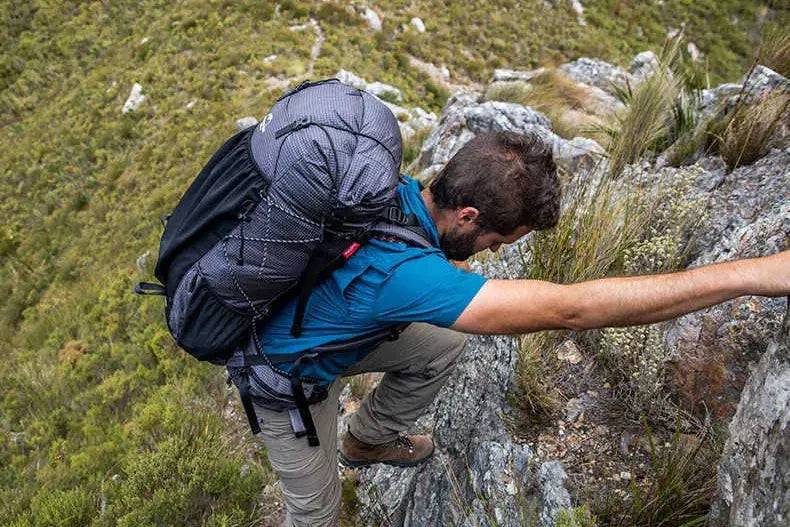
Experience reliable support and effortless comfort with our Far Wind Three-Section Telescopic Carbon Trekking Pole. Designed for hikers who value light weight, durability, and smooth handling, it provides dependable stability across a wide range of outdoor terrains and activities.
Key Features:
Thank you for your order!
Estimated delivery times:
Please note: to ensure your tracking number remains valid—especially on China-origin shipments that may generate intermediate tracking numbers—there may be a short delay before we upload it. We appreciate your patience and support!
We Believe in What We Build
At NATUREHIKE, we understand the importance of reliable gear in the backcountry. That’s why our products are engineered to meet the highest quality standards and rigorously tested before reaching you.
Return & Exchange
Conditions of return
Damaged Items
If your product arrives damaged due to packaging issues, please contact us within 3 days of receipt, and we will arrange a replacement.
Warranty
If you encounter an issue covered by the NATUREHIKE Limited Warranty, please contact our team for assistance. We’re here to help you get started.
When choosing trekking poles, consider your terrain, hiking distance, pole material, weight, adjustability, packed size, grip, and locking system.
For long-distance hiking and backpacking, lighter and more compact poles can help reduce the weight you carry. For mountain trails and varied terrain, adjustable poles allow you to change the length as the slope changes. Also look for comfortable grips and straps, and a secure locking system that is easy to operate on the trail.
Naturehike offers both carbon fiber and aluminum trekking poles, as well as different adjustable and collapsible designs, so you can choose based on your hiking style and priorities.
The right trekking pole length depends mainly on your height. For general hiking on level ground, a good starting point is to adjust the poles so that your elbows form roughly a 90° angle when you hold the grips with the pole tips touching the ground.
As a general guide, hikers under about 165 cm (5'5") can usually start with Naturehike poles in the 56/57–120 cm range. Hikers around 165–180 cm (5'5"–5'11") may be comfortable with either the 120 cm or 135 cm adjustable range, depending on body proportions and preferred setup. For hikers around 180–190 cm (5'11"–6'3"), the longer 61/62–135 cm range generally provides more adjustment room.
These are starting points rather than strict rules. After choosing the appropriate range, fine-tune the length until your shoulders feel relaxed and your elbows stay close to 90°.
Both materials are widely used for trekking poles, but they offer different advantages.
Carbon fiber trekking poles are typically lighter and offer good stiffness and vibration damping, making them especially appealing for long-distance hiking and backpacking where reducing weight matters.
Aluminum trekking poles are generally durable, practical, and more resistant to certain types of impact. Under excessive force, aluminum may bend rather than fracture, making it a popular choice for general hiking and rugged use.
In simple terms:
Choose carbon fiber: If lightweight performance is your priority.
Choose aluminum: If durability, versatility, and value are more important.
Adjusting pole length as the terrain changes can make hiking more comfortable and provide better support.
For uphill sections, shorten the poles slightly so your hands and arms stay in a natural position while climbing.
For downhill sections, lengthen the poles slightly to give you more reach as you place the poles farther down the trail.
As a general starting point, adjustments of around 5–10 cm may be enough, but the ideal change depends on the slope and your body proportions. Naturehike adjustable trekking poles make it easy to adapt pole length as terrain changes.
Trekking pole straps help support your hands and allow you to maintain a more relaxed grip, which can reduce hand fatigue during long hikes.
Adjust the straps so they support your wrists and hands without feeling too tight or restricting movement. When properly adjusted, you should not need to squeeze the grips tightly with every step.
Correct strap adjustment can make a noticeable difference in comfort, especially when using trekking poles continuously over long distances.
Different tips and baskets are designed for different trail conditions.
Standard trekking tips: Suitable for most dirt and hiking trails.
Rubber tip covers: Useful on pavement and other hard surfaces, helping improve contact and reduce noise.
Standard trekking baskets: Help prevent poles from sinking too deeply into soft soil or loose terrain.
Larger snow baskets: Provide more surface area to help prevent poles from sinking deeply into snow.
Choose accessories based on the terrain and make sure they are securely installed before hiking. Replace tips or baskets when they become excessively worn or damaged.
When choosing trekking poles, consider your terrain, hiking distance, pole material, weight, adjustability, packed size, grip, and locking system.
For long-distance hiking and backpacking, lighter and more compact poles can help reduce the weight you carry. For mountain trails and varied terrain, adjustable poles allow you to change the length as the slope changes. Also look for comfortable grips and straps, and a secure locking system that is easy to operate on the trail.
Naturehike offers both carbon fiber and aluminum trekking poles, as well as different adjustable and collapsible designs, so you can choose based on your hiking style and priorities.
The right trekking pole length depends mainly on your height. For general hiking on level ground, a good starting point is to adjust the poles so that your elbows form roughly a 90° angle when you hold the grips with the pole tips touching the ground.
As a general guide, hikers under about 165 cm (5'5") can usually start with Naturehike poles in the 56/57–120 cm range. Hikers around 165–180 cm (5'5"–5'11") may be comfortable with either the 120 cm or 135 cm adjustable range, depending on body proportions and preferred setup. For hikers around 180–190 cm (5'11"–6'3"), the longer 61/62–135 cm range generally provides more adjustment room.
These are starting points rather than strict rules. After choosing the appropriate range, fine-tune the length until your shoulders feel relaxed and your elbows stay close to 90°.
Both materials are widely used for trekking poles, but they offer different advantages.
Carbon fiber trekking poles are typically lighter and offer good stiffness and vibration damping, making them especially appealing for long-distance hiking and backpacking where reducing weight matters.
Aluminum trekking poles are generally durable, practical, and more resistant to certain types of impact. Under excessive force, aluminum may bend rather than fracture, making it a popular choice for general hiking and rugged use.
In simple terms:
Choose carbon fiber: If lightweight performance is your priority.
Choose aluminum: If durability, versatility, and value are more important.
Adjusting pole length as the terrain changes can make hiking more comfortable and provide better support.
For uphill sections, shorten the poles slightly so your hands and arms stay in a natural position while climbing.
For downhill sections, lengthen the poles slightly to give you more reach as you place the poles farther down the trail.
As a general starting point, adjustments of around 5–10 cm may be enough, but the ideal change depends on the slope and your body proportions. Naturehike adjustable trekking poles make it easy to adapt pole length as terrain changes.
Trekking pole straps help support your hands and allow you to maintain a more relaxed grip, which can reduce hand fatigue during long hikes.
Adjust the straps so they support your wrists and hands without feeling too tight or restricting movement. When properly adjusted, you should not need to squeeze the grips tightly with every step.
Correct strap adjustment can make a noticeable difference in comfort, especially when using trekking poles continuously over long distances.
Different tips and baskets are designed for different trail conditions.
Standard trekking tips: Suitable for most dirt and hiking trails.
Rubber tip covers: Useful on pavement and other hard surfaces, helping improve contact and reduce noise.
Standard trekking baskets: Help prevent poles from sinking too deeply into soft soil or loose terrain.
Larger snow baskets: Provide more surface area to help prevent poles from sinking deeply into snow.
Choose accessories based on the terrain and make sure they are securely installed before hiking. Replace tips or baskets when they become excessively worn or damaged.
Naturehike products are crafted with precision and durability, trusted by outdoor enthusiasts worldwide. Enjoy unparalleled quality and comfort on every adventure.
Built well. Very light and easy to adjust. The handles are comfortable. Looking forward to many days on the trail.